What Fallen Leaves Do Beneath the Surface
Fallen leaves soften into soil, shelter tiny garden life, and reveal how surface cover and soil conditions interact beneath your feet.
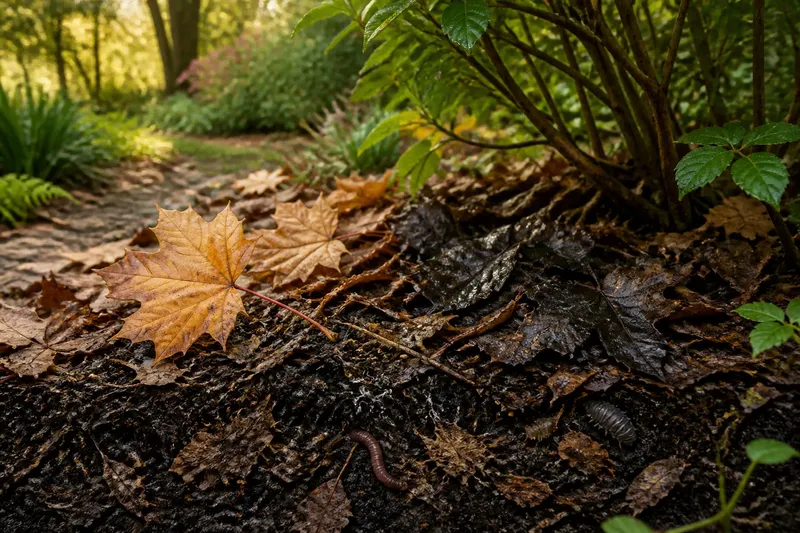
After a windy night, a maple leaf may lie crisp beside a dark, damp one tucked under a shrub. That contrast is a clue to what fallen leaves do beneath the surface: they become food, shelter, and eventually part of the garden’s soil.
The changes happen in stages, and not every leaf follows the same timetable. Watching the shift from whole leaf to fragments can tell you about moisture, contact with soil, and the small organisms working in a bed. The useful question is not simply whether leaves have disappeared, but what their changing forms suggest about the garden floor.
What happens to fallen leaves after they land?
Fallen leaves first form a loose surface layer. Rain and dew soften their tissues; wind shifts them into corners and beneath plants; fungi and small animals gradually break them into pieces. Those fragments mix with the upper soil and continue to change as soil life consumes and transforms them.
A leaf does not turn directly into rich soil in one step. Its structure is gradually dismantled, and its organic matter becomes part of the material cycling through the garden. A gardener may see the sequence clearly: intact leaf, torn leaf, fine fragments, and a darker surface where bits have mingled with soil.
The route varies with leaf type and location. A thin birch leaf may crumple quickly, while a thick, leathery leaf can remain recognizable longer. A leaf resting on a dry path behaves differently from one held against moist soil beneath a hedge. The surface is not a conveyor belt; it is more like a busy kitchen counter, where ingredients change at different rates depending on their condition and what is working on them.
Why do some leaves break down faster than others?
Moisture, contact, temperature, leaf structure, and access by decomposers all shape the pace. Moist leaves are easier for fungi and many small soil animals to work on than brittle, dry ones. Leaves pressed into contact with soil also share moisture and organisms with the ground more readily than leaves suspended in a dense, dry heap.
Texture matters. Soft leaves often tear and collapse sooner; tough leaves may persist as recognizable pieces. A thick layer can also stay dry on top while remaining damp underneath, so a quick glance at the uppermost leaves may not reveal the conditions below. Turning over a small edge of the litter gently can show whether the lower layer is moist, fragmented, or still crisp.
Shade and shelter make a difference, too. Leaves caught beneath a shrub are less exposed to wind and direct sun than those spread across an open patch. They may remain damp longer, creating a more suitable working environment for decomposers. That does not mean every shaded pile will vanish quickly: the leaf material and local conditions still matter.
Which small garden life works among leaf litter?
Fungi, bacteria, earthworms, springtails, mites, millipedes, and other small invertebrates contribute in different ways. Some feed on decaying material, some graze on fungi or bacteria, and some break leaves into smaller pieces as they move through them. Their activity is often easiest to notice indirectly, through fragments, softened tissue, fine soil particles, or small openings in the litter.
Not every creature beneath a leaf is a decomposer, and a single sighting does not tell the whole story. A woodlouse, for instance, may be sheltering in a damp pocket as well as feeding on plant material. The leaf layer offers both food and a less exposed place to move, rest, or avoid drying out.
That makes leaf litter a small habitat as well as a source of organic matter. Removing every fallen leaf from a bed removes cover along with the material itself. In a tidy path or around a plant crown that needs airflow, clearing may make sense; beneath shrubs or in an undisturbed corner, some litter can remain as a modest refuge. Keep the choice local rather than treating the whole garden as one uniform surface.
What can leaf fragments tell you about the soil below?
Fragments offer clues, not a complete soil diagnosis. Soft, darkening pieces in contact with damp soil suggest active breakdown in that spot. Crisp, intact leaves may point to dryness, exposure, or simply a tougher leaf type. A patch where leaves have gathered can also reveal how wind and planting structure move material around the garden.
Look for patterns across nearby places. If leaves under a dense hedge stay whole and dry while those beneath a more open shrub are soft underneath, the difference may reflect how rain reaches the ground and how air moves through each planting. If fragments collect where stems meet the soil, that may mark a sheltered pocket with steady contact. None of these observations, by itself, proves that the soil is healthy or unhealthy.
For a useful look, choose a small area and note the leaf condition, the feel of the material below it, and whether fragments touch the soil. Return to the same spot after weather changes. The comparison helps separate a local pattern from a one-day snapshot, without disturbing the whole bed.
Should you leave fallen leaves on garden soil?
Leave some where they form a loose, manageable layer and are not smothering plants that need light or airflow. Leaves beneath trees and shrubs can protect the soil surface from direct exposure and provide habitat as they break down. In a vegetable bed, around young seedlings, or beside plants prone to crown problems, a thick, wet layer may be inconvenient; move it aside or use a thinner covering where appropriate.
Shredding with a lawn mower can make leaves easier to spread and less likely to mat into a dense sheet, though it is not needed everywhere. A rake, hand fork, or gloved hand is enough for checking a small patch. Keep leaves out of drains and clear walking surfaces where they become slippery. For particular plants or materials, follow relevant product labels or local guidance.
Say you find a thick drift of whole, damp leaves pressed against the base of a small perennial. You could lift part of the drift with a rake, leave a lighter scattering nearby, and check whether the plant’s crown is exposed to airflow while soil remains covered around it. The observable result to look for is a less crowded base and a remaining layer of leaves that can still shelter the soil; adjust if the area stays soggy or the plant appears stressed.
How can you tell whether leaf litter is breaking down?
Look for several signs together: edges that are soft or ragged, leaves broken into smaller pieces, darkened material near the soil, and small organisms or fine castings among the litter. A leaf that is still recognizable may already be changing; its surface can soften before it falls apart.
By contrast, leaves that remain dry and crisp may be waiting for wetter conditions rather than failing to decompose. Check beneath the top layer before drawing a conclusion. The exposed surface can look unchanged while the sheltered underside has begun to soften.
Why are leaves still whole after a long time?
Whole leaves often persist because they are tough, dry, or poorly connected with moist soil. Leaves gathered in an airy place can also dry between rains, slowing the activity of organisms that rely on damp conditions. A layer can remain recognizable without indicating a problem.
Compare the leaf material with a softer, more sheltered patch nearby, and look beneath the top leaves for changes. If the covering is smothering a plant, interfering with a path, or blocking a drain, move it for that practical reason rather than assuming its slow breakdown signals bad soil.
Do fallen leaves make soil more acidic?
Leaf litter changes as it decomposes, but the effect on soil depends on the leaf material, soil conditions, and the ongoing processes in that place. A visible layer of leaves does not tell you the soil’s pH. If a particular plant requires a specific pH, use an appropriate soil test and follow its instructions rather than judging from leaf appearance.
For ordinary observation, note how the litter changes and where it gathers. That can help explain local moisture and habitat patterns, but it cannot substitute for a soil test when a precise pH decision matters.
How should you read the garden floor?
Fallen leaves make the garden floor legible. Their position shows where wind deposits them; their texture hints at exposure and moisture; their fragments mark the gradual work of decomposers. The best reading comes from noticing several signs together rather than assigning a single meaning to one leaf.
When you check fallen leaves beneath the surface, lift only a small section and return it afterward. That simple pause can show which areas are drying, which remain sheltered, and where leaf material is becoming part of the soil. Leave the rest of the garden’s quiet work in place, and let the next change in weather offer another clue.