A Late-Winter Garden Walk for Signs of Change
A late-winter garden walk helps you spot buds, shifting light, and sheltered wildlife while choosing what to leave undisturbed and what may need attention.
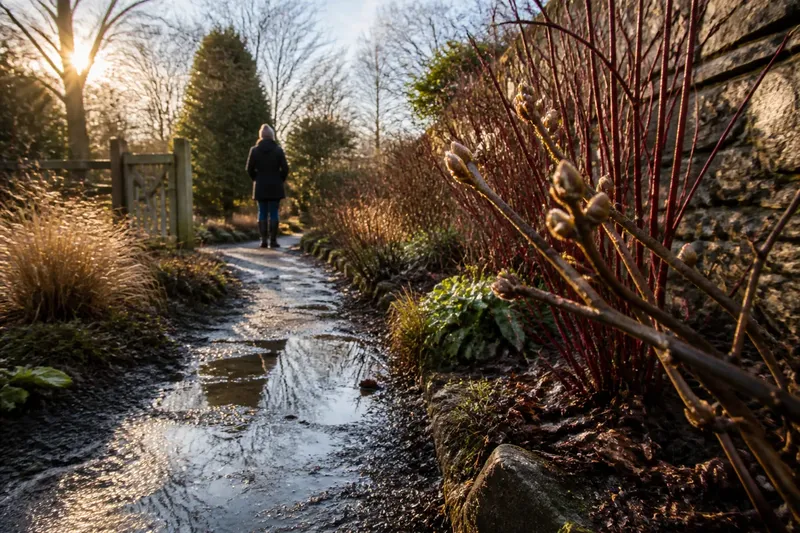
A damp path shines beside a bed of bare stems, and one currant twig carries buds that look rounder than its neighbors. On a late-winter garden walk, those small details can help you decide what to leave undisturbed and where a closer look may be useful.
Take a coat and leave the pruning shears inside. This is not a tour of everything that might need doing; it is a chance to read the garden’s current conditions before weather and new growth change the scene.
Start with the garden’s overall layout
Pause at the threshold and take in several areas at once. Look for places that remain shaded or frosty, water shining on the ground, and stems that have fallen across a path. This broad view helps you notice practical concerns, such as a slippery route or a branch obstructing access, without mistaking every winter change for a problem.
Muted colors can make small contrasts stand out: dark soil beneath a shrub, straw-colored grasses in an open bed, or evergreen leaves in a sheltered corner. Think of the first view as looking into a room before moving a chair. You can understand the arrangement without disturbing anything.
Read buds and stems before reaching for tools
Choose a shrub or perennial clump and follow its stems from the base toward the tips. On lilac or dogwood, buds may sit at twig ends, beside leaf scars, or near branch junctions. Compare neighboring stems, since a sunny outer branch and a sheltered inner one may look different.
Also notice whether last season’s stems remain upright, bend gently, or have split. Avoid rubbing buds or tugging on a damaged stem just to inspect it. If a branch blocks a walkway or appears unstable, mark the spot mentally and make any pruning decision in suitable conditions; for questions about a large or hazardous branch, ask a qualified arborist.
Say you see a currant beside a sunny wall with one twig bearing fuller-looking buds and another with tight buds. You leave both untouched, note which side faces the wall, and check the plant’s shape before planning any pruning. The immediate decision is clear: there is no visible obstruction, so no cut is needed on this walk; the difference in buds alone does not call for removing a branch.
Check the ground without stepping into wet beds
From the path or bed edge, look for standing water, a fine surface crust, tiny channels, or grit that may have shifted. A shallow hollow may stay wet while a raised edge looks drier. These details can help explain where foot traffic or runoff may cause trouble.
Keep your weight off saturated soil; footprints can press and smear its surface. A bare-looking patch may still shelter roots, seeds, and small creatures below. If you see water pooling where people need to walk, choose a safer route for now and consider addressing drainage when the ground is workable, rather than digging into a wet bed.
Notice cover, sound, and changing light
Pause where you can see a hedge or fence and listen for brief bird calls, wind through dry stems, or movement in dense cover. If a bird appears, watch from a distance and let it keep its hiding place. A quiet garden may still provide shelter even when little is visible.
Look at the light as well. A wall or path may now receive sun that it missed earlier in winter, while a fence shadow falls across a different part of the bed. These shifts can help explain why one spot dries or warms sooner than another. If you make a note or take a photo, include a fixed feature such as a gatepost so the location is unmistakable.
What should you do with common winter signs?
How can I tell whether a bud is changing?
Look at its outline and position beside other buds on the same plant. A fuller shape or loosening outer scales can suggest change, but a single look cannot tell you exactly when it will open.
Should I touch the soil to check its condition?
For a quiet walk, start with visible signs such as sheen, standing water, cracks, or a crusted surface. If you need to make a planting or watering decision, use guidance suited to the plant and your local conditions.
What should I do if I see a damaged stem?
Check from a safe position whether it is split, bent, or simply resting against a neighboring stem, and whether it blocks a path. Leave minor damage alone for now; if a large branch seems unstable or could fall, keep clear and consult a qualified arborist.
Can children join a late-winter garden walk?
Yes. Invite them to describe a stem, sound, or patch of light, and agree to look without picking buds or pulling branches. Keep them on firm paths around soft or slippery beds.
Use a short decision list for what you notice
A useful walk can end with a few specific observations and a clear choice for each. Check the condition and location, then decide whether to leave it alone, change your route, or seek help.
- Wet path: If water or slick mud covers the route, use a firmer path; if no safer route is available, wait until conditions improve before crossing.
- Pooled water in a bed: If a hollow holds visible water, avoid stepping or digging there; if it is near a walkway, note the location and consider drainage work when the soil is workable.
- Split stem: If a small stem is split but does not obstruct access, leave it undisturbed for this walk; if a large branch appears unstable, keep clear and contact a qualified arborist.
- Branch across a path: If a fallen stem is light and easy to pass without touching, choose another route; if it blocks access or is heavy, keep clear and arrange appropriate help.
- Bud difference: If buds vary between sunny and sheltered sides, leave both branches in place; if a separate branch is broken or hazardous, assess that issue on its own rather than judging by bud size.
- Bird in dense cover: If a bird retreats into a hedge, stay back and continue along another route; if the area borders a busy path, keep people and pets away from the hiding spot.
Leave with one useful decision
Before going indoors, choose the detail that affects what happens next: perhaps a path to avoid, a branch that needs expert attention, or a bed that should not be walked on while wet. A brief note can record that decision without turning the garden into an inventory.
The point of a late-winter garden walk is not to make every stem neat. It is to recognize the difference between ordinary seasonal variation and a practical concern, then leave the rest of the garden room to change at its own pace.